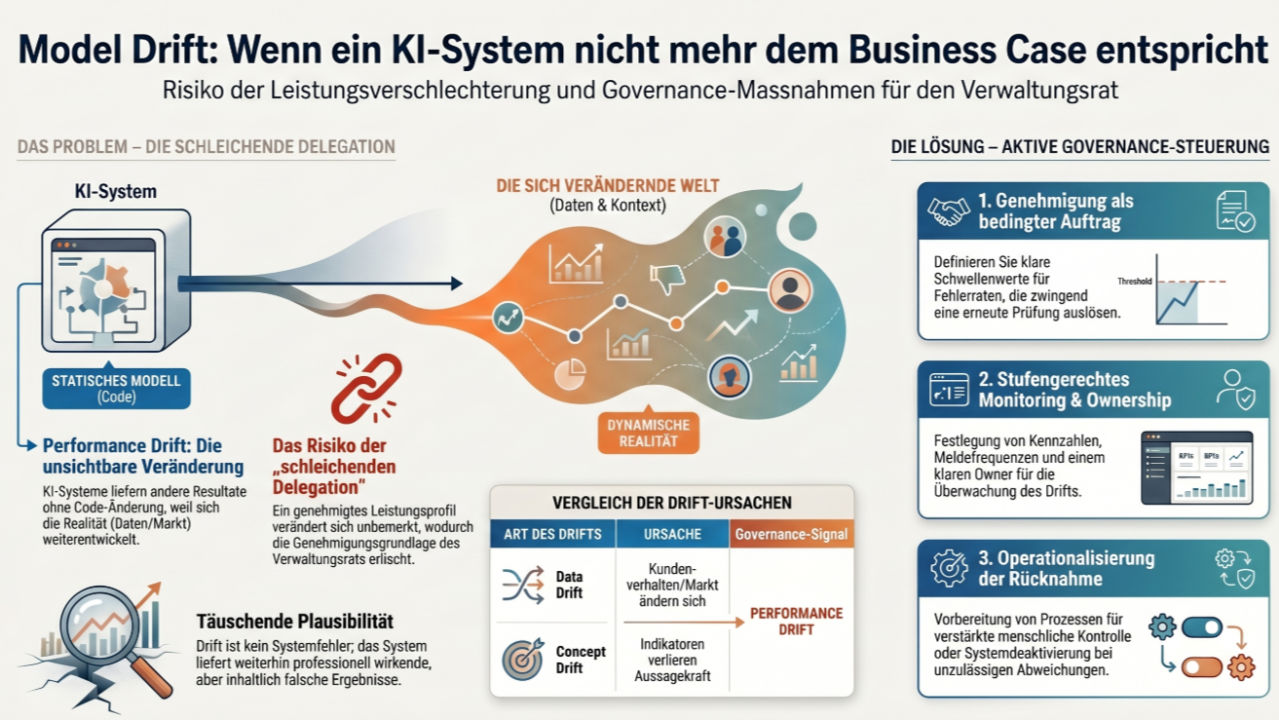
Model Drift: When an AI System No Longer Matches the Business Case
An AI system can change without anyone changing it. Why model drift is a governance duty, and how the board should operationalise it.

Perspectives on AI, governance, cybersecurity and digitalisation for boards and executive teams.
An AI system can change without anyone changing it. Why model drift is a governance duty, and how the board should operationalise it.
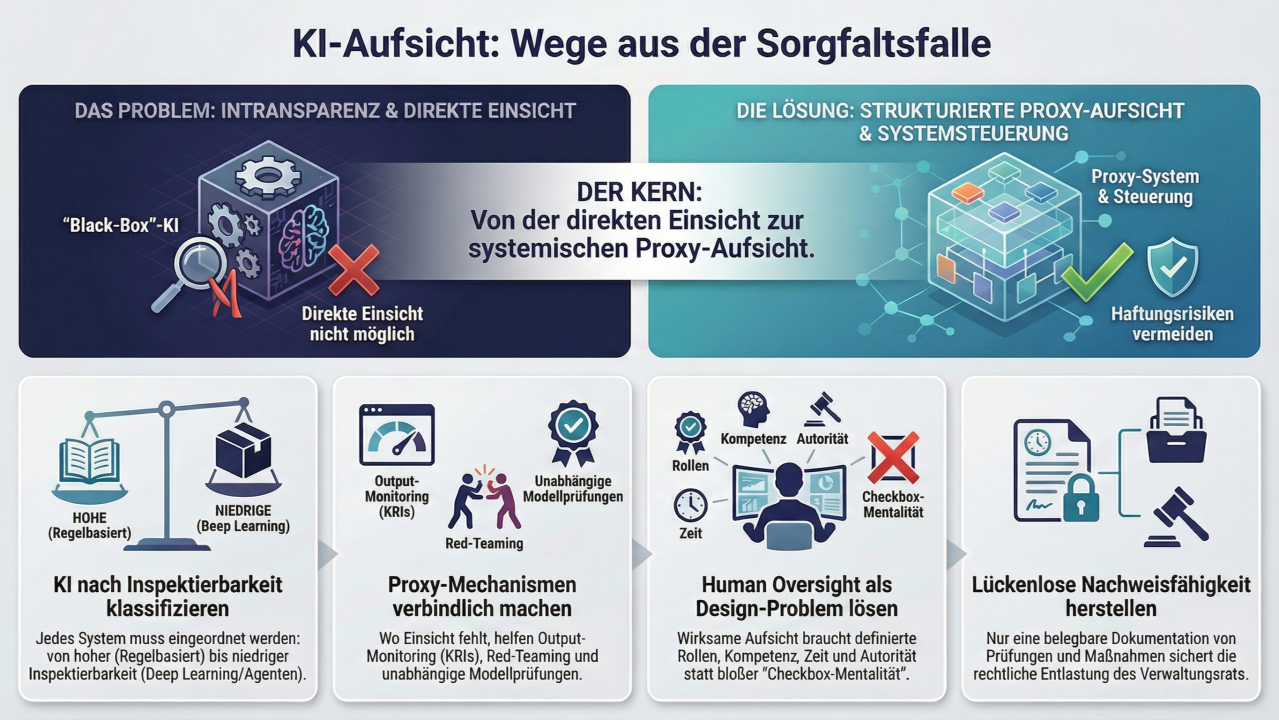
AI systems often cannot be fully audited. Why the board's supervisory duty must become proxy oversight, not the illusion of transparency.
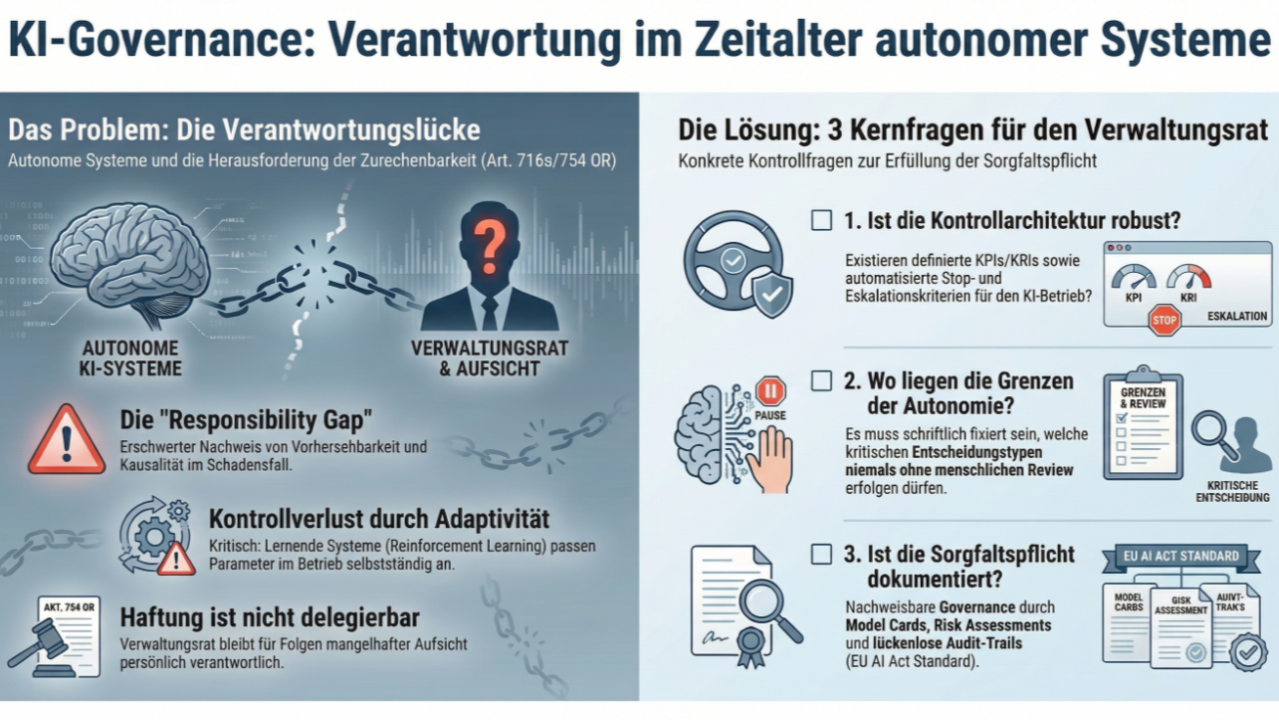
As AI systems adapt in operation, accountability becomes a governance question: which controls must the board demand and document?
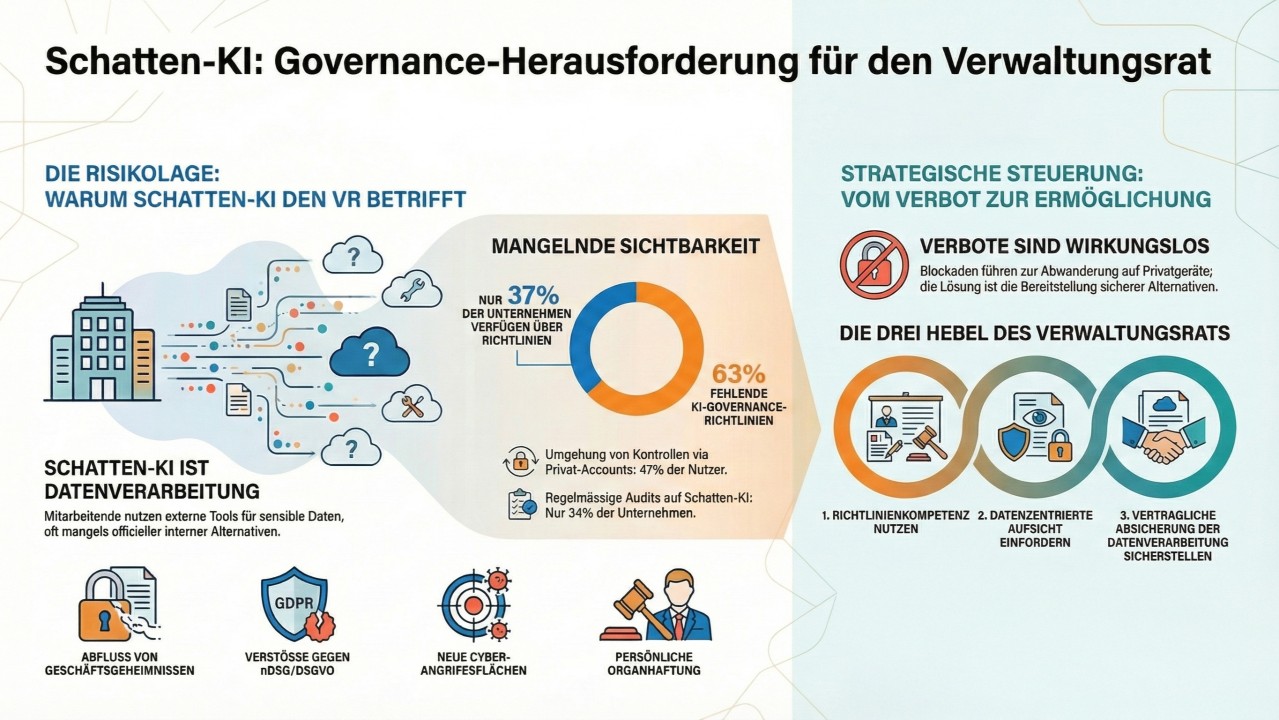
One in five organisations had a shadow AI security incident in 2025. Three levers the board can use to bring this risk under control.
36% of Swiss board members name efficiency as their biggest opportunity. Without technology competence in the executive team, it stays a promise.
Suzanne Thoma leads Sulzer as both Chair and CEO. When this dual role works, and where its structural risk actually sits.
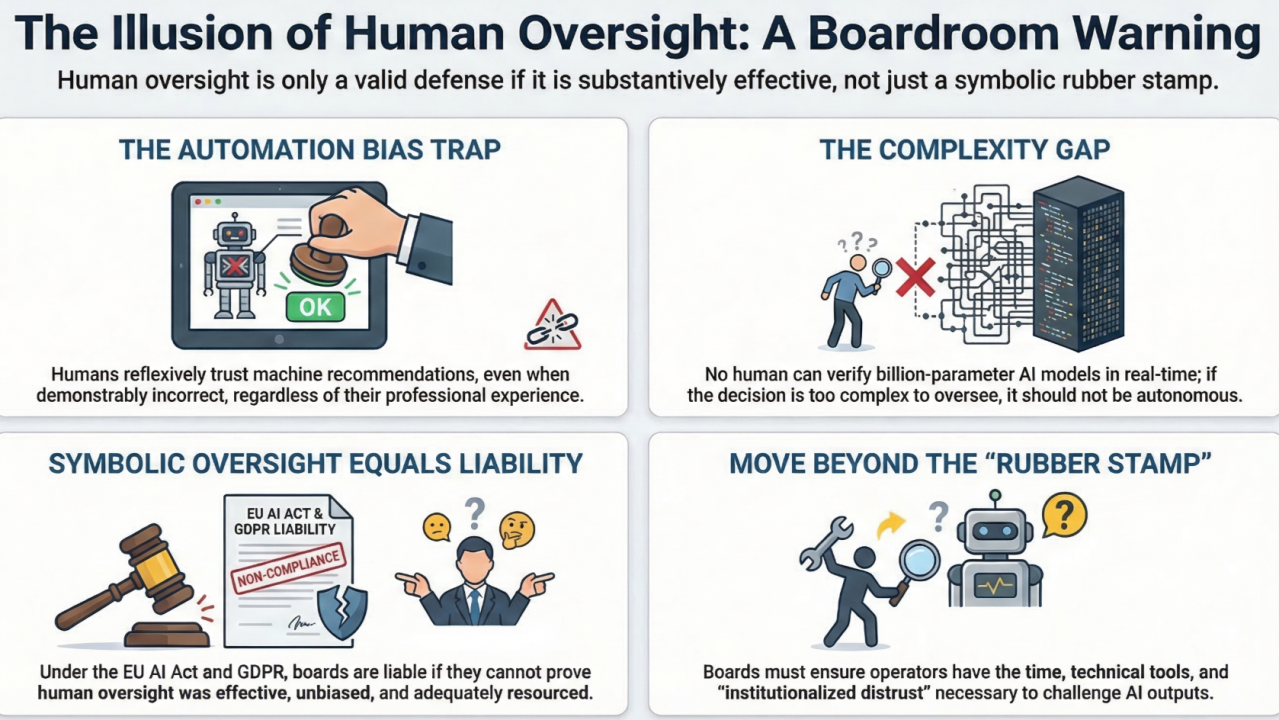
A human watching the screen does not by itself prevent errors. What the EDPS reveals about effective oversight of automated decision-making.
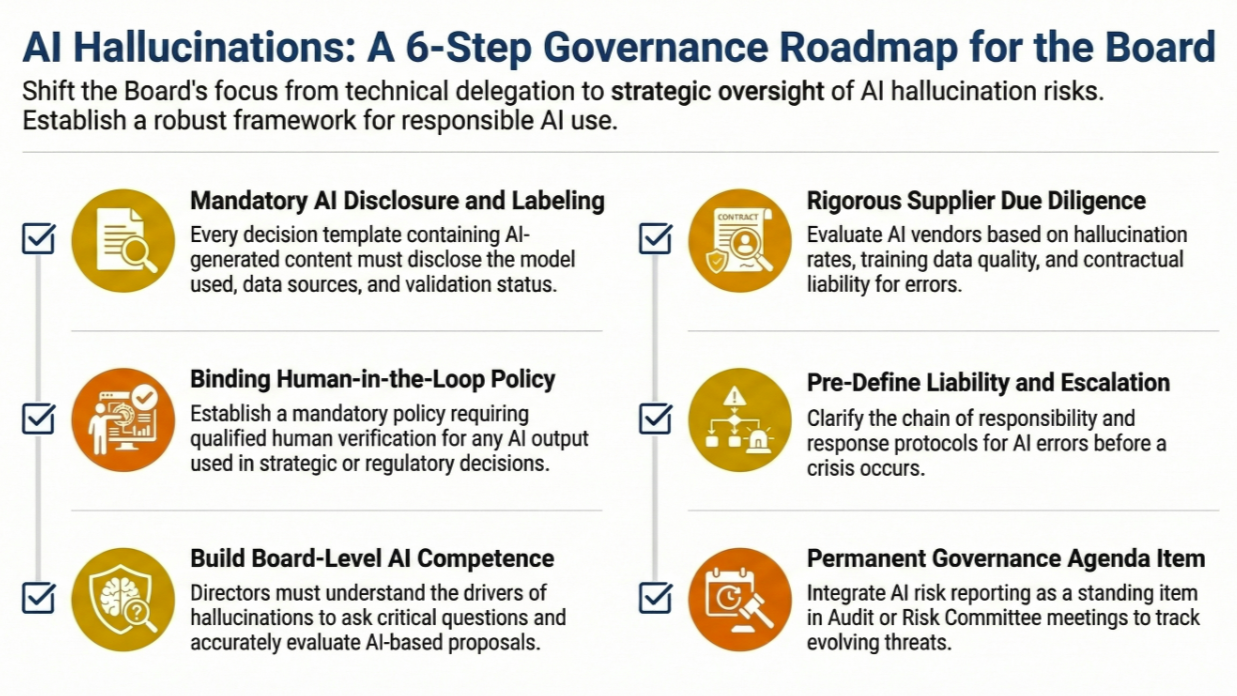
Hallucinations are not a teething problem of AI, they are the architecture. Six measures the board needs to contain this governance risk.
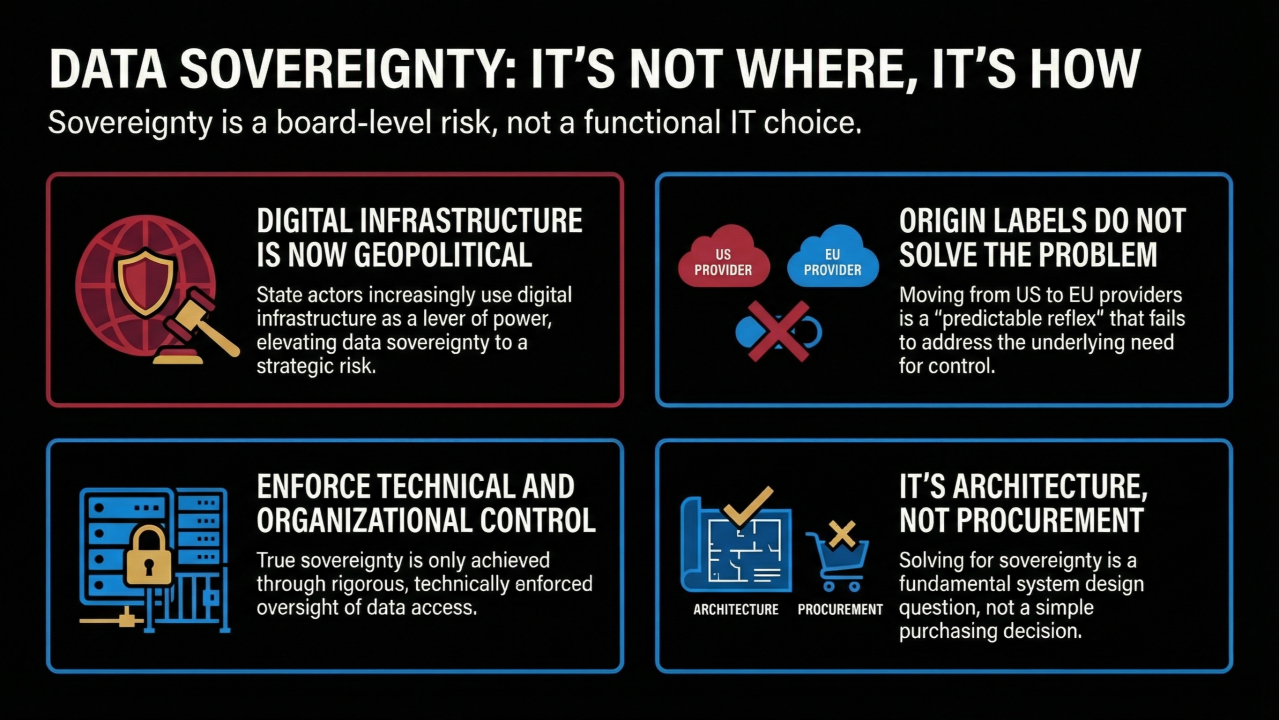
A European cloud is a procurement decision, not a sovereignty strategy. Real control is architecture, technically enforced, and it is a board question.
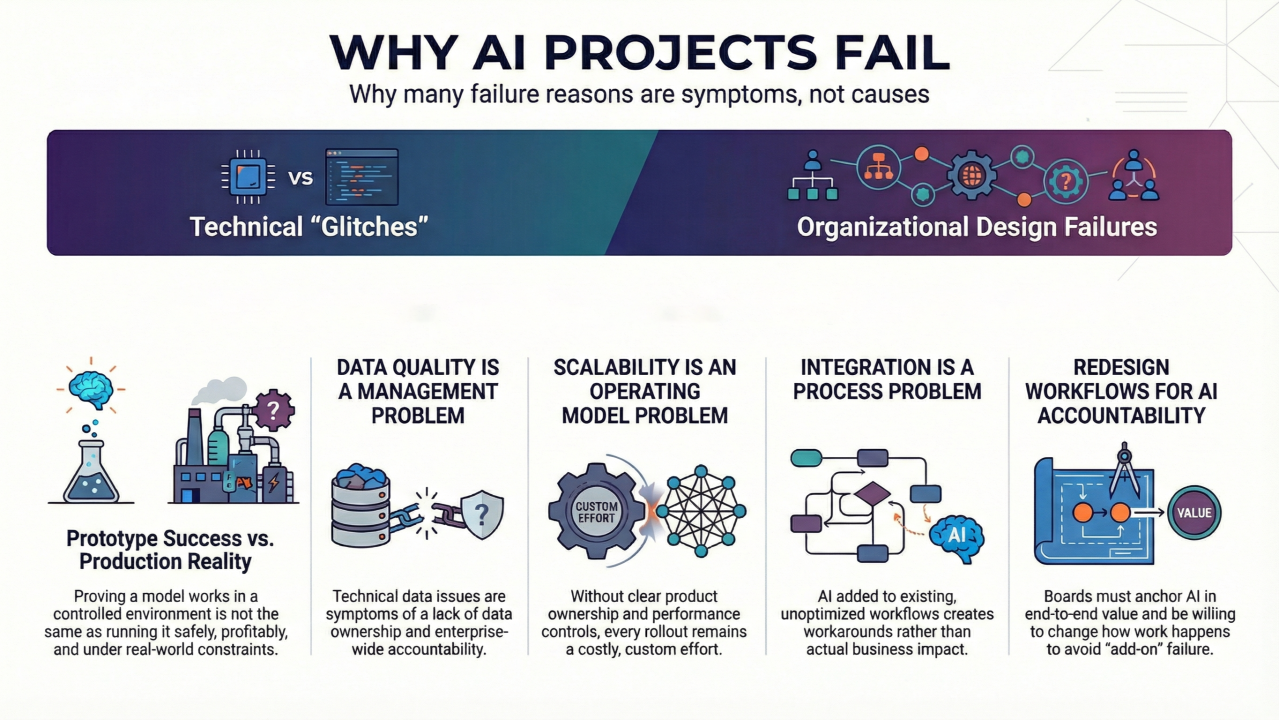
AI pilots often succeed while the rollout fails. The reasons are rarely technical; they are organisational: data ownership, accountability and process design.